



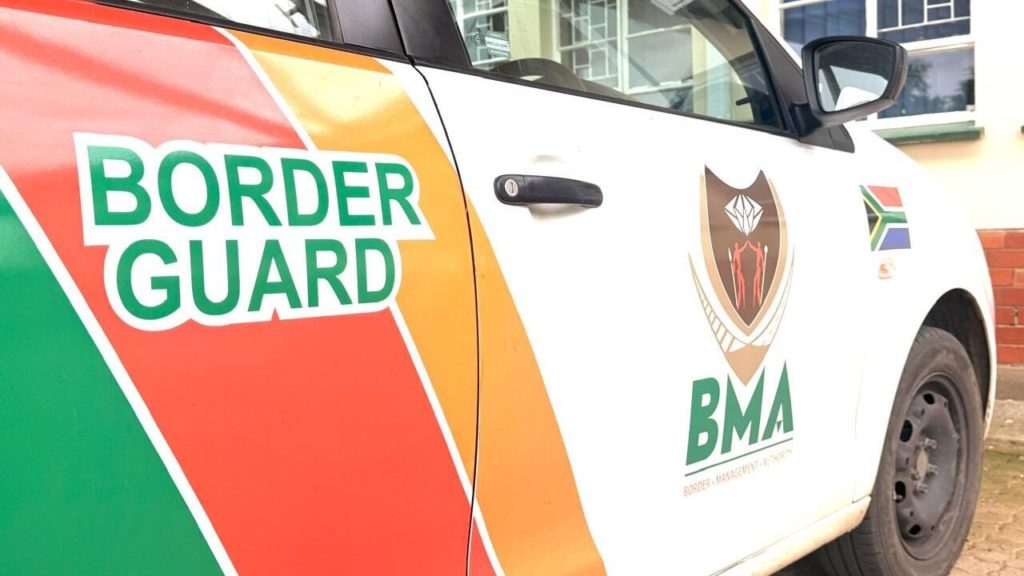
South Africa is preparing to strengthen security at its busiest border crossings ahead of the festive season, with drones, body cameras and mobile response teams forming part of a wider effort to combat illegal migration, human trafficking and organised cross-border crime, Cape {town} Etc reports.
The Border Management Authority (BMA) has identified technology failures as one of the biggest threats to effective border control, warning that criminal networks can take advantage of system downtime to facilitate illegal crossings and document fraud.
To reduce the risk, dedicated information and communications technology (ICT) technicians will be stationed at 12 priority ports of entry to ensure critical systems remain operational during the busy holiday period.
The intervention forms part of the BMA’s broader security strategy for the 2026 festive season, when increased passenger and freight movement places additional pressure on South Africa’s border infrastructure.
Technology takes centre stage in border crackdown
According to MyBroadband, the BMA’s festive season plan combines intelligence gathering, proactive enforcement, specialised operations and faster responses to suspicious activity.
Drones will play an important role, providing officers with aerial surveillance of vulnerable border areas and helping them respond more quickly when potential illegal crossings are detected.
Four designated drone ports have been identified at:
- Beitbridge
- Oshoek
- Ficksburg
- Maseru Bridge
However, the equipment will not necessarily remain at these locations, with the authority able to move it to other areas where intelligence points to increased security risks.
The BMA said previous deployments during the 2025 festive season and Easter period demonstrated the technology’s value, particularly in helping officers identify and apprehend people attempting to cross the border illegally.
Officers will also receive body cameras fitted with integrated push-to-talk radios, while mobile reaction units will be positioned at or close to selected ports of entry.
The intention is to connect surveillance with enforcement, allowing response teams to act on information as it becomes available rather than relying solely on routine patrols.
What can the new border drones do?
The BMA’s technology upgrade was brought into the spotlight in April 2025, when Home Affairs Minister Leon Schreiber unveiled the authority’s new drones and body cameras.
Two models, the Evo Max 4N and Evo Max 4T, were introduced for border surveillance operations.
At the time, Schreiber explained that the four drones would initially operate from designated border posts but could be moved wherever additional surveillance was needed.
The aircraft can reportedly be airborne within 15 minutes of a disturbance being detected and reach speeds of up to 43kph.
Their capabilities include thermal imaging, long-range zoom cameras and technology that can identify people attempting to conceal themselves behind objects.
The Evo Max 4T is better suited to daytime operations, while the 4N is designed for night surveillance.
Its starlight camera can reportedly operate in extremely low light, while autonomous navigation lets it manoeuvre around obstacles. The drones also feature artificial intelligence-powered object identification and tracking.
Schreiber previously highlighted the importance of having the equipment available beyond ordinary daylight patrol hours.
He said the drones would be operated by eight trained pilots, with two assigned to each aircraft and working in shifts to support round-the-clock operations.
System downtime remains a major concern
While aerial surveillance and mobile response teams will strengthen physical border security, the BMA has also identified a less visible vulnerability: the technology that keeps ports of entry functioning.
Electronic movement control and border management systems are central to processing travellers and monitoring movement into and out of South Africa.
When these systems stop working, officers face additional operational challenges, potentially creating opportunities for criminal activity. The BMA has therefore made system availability a key priority, with full-time ICT technicians expected to provide on-site support at selected high-volume crossings.
Remote and backline technical assistance will also be coordinated with the Department of Home Affairs and the South African Revenue Service (SARS). The authority considers reliable ICT infrastructure a fundamental requirement for its festive season security plans, rather than simply an administrative support function.
Which border crossings will receive additional attention?
The BMA has identified 12 priority ports of entry where additional operational support will be required.
These include:
- Beitbridge
- Lebombo
- OR Tambo International Airport
- Cape Town International Airport
- Port of Cape Town
- Port of Durban
- Oshoek
- Kopfontein
- Maseru Bridge
- Ficksburg
The list covers some of the country’s busiest land, air and maritime entry points, where passenger volumes, commercial activity and cross-border movement create different security challenges.
The authority also has large amphibious vehicles available to help monitor and assess activity along border areas.
Ultimately, the festive season operation will depend on how effectively the BMA combines surveillance technology, trained personnel and functioning systems.
With criminal syndicates increasingly exploiting weaknesses in border enforcement, keeping the country’s ports operational could prove just as important as having more officers and equipment on the ground.
Be the first to know – Join our WhatsApp Channel for content worth tapping into! Click here to join!
Worth a Read:
SA pilot reportedly captured after aircraft shot down in DRC
Picture: @TheBMA_SA / X