


A documentary that promotes claims denying the Holocaust and portrays Jewish people through conspiracy theories will no longer be permitted for distribution in South Africa following a ruling by the country’s film regulator.
The Film and Publication Board (FPB) has refused classification to Hebrews to Negroes: Wake Up Black America, a US-produced film that it says promotes antisemitism, spreads dangerous misinformation and contains language intended to dehumanise Jewish people, as per Times Live.
The decision means the documentary must be removed from distribution platforms in South Africa. It also carries potential legal consequences for anyone who knowingly distributes or publicly exhibits the film in contravention of the country’s Films and Publications Act. The legislation sets out penalties for distributing material that has been refused classification.
Why the documentary was banned in South Africa
The FPB’s decision centres on what it identified as hate speech, Holocaust denial and the promotion of harmful conspiracy theories.
In its findings, the regulator highlighted a passage describing Jews as ‘parasites among the nations’, saying such language strips people of their humanity and has historically been used to justify discrimination, violence and genocide.
The board also took issue with the film’s use of racial slurs, its rejection of the historical reality of the Holocaust and claims that Jewish people secretly control institutions such as the media, banking and education.
According to the regulator, the content failed to meet the standards expected of a legitimate documentary, particularly its obligation to provide an informed and historically accurate account of the subject matter.
The film, which runs for more than three hours, was produced by Ronald Dalton Jr. It disputes the identity of modern Jewish people and advances conspiracy theories about Jewish power and influence.
The FPB concluded that the material crossed the line into incitement to cause harm rather than remaining within the bounds of protected expression.
Complaint followed a screening in Soweto
The ruling follows a complaint lodged by the South African Jewish Board of Deputies (SAJBD), which raised concerns about the film’s portrayal of Jewish people and its alleged promotion of racial and religious hatred.
The organisation first became aware of the documentary after it was screened at the Soweto Theatre in June 2023.
According to the SA Jewish Report, the complaint was formally pursued with the FPB, with the film’s producer also given an opportunity to respond during proceedings in June 2024. The process ultimately resulted in the refused-classification decision announced in January 2026.
Welcoming the outcome, the SAJBD argued that freedom of expression should not be used as a justification for spreading hatred against people because of their religion or identity.
The organisation also said the decision demonstrated the role of South Africa’s regulatory institutions in protecting dignity and equality.
The ruling requires the film’s distributor to remove it from platforms in the country.
The decision has practical consequences beyond a warning or an age restriction.
Under South Africa’s Films and Publications Act, material that advocates hatred based on an identifiable group characteristic and constitutes incitement to cause harm can be refused classification, subject to the law’s provisions and exceptions.
Section 18H prohibits the distribution, through any medium, of films, games or publications that fall within specified categories of prohibited content, including hate speech. Section 24G provides for a fine of up to R150 000, imprisonment for up to two years, or both, for a person convicted of knowingly distributing prohibited material of this kind.
That distinction matters: the legal provisions concern prohibited distribution and related conduct. The ruling should not automatically be interpreted as making mere private possession a separate offence under these provisions.
The law also recognises that context matters when determining whether material constitutes a bona fide documentary or has scientific, literary, artistic or public-interest merit. The FPB’s decision reflects its finding that this particular film did not qualify for protection on that basis.
The decision comes at a time when discussions about antisemitism, Israel and the war in Gaza have become increasingly contentious in South Africa.
In December 2023, South Africa brought a case against Israel at the International Court of Justice, alleging violations of the Genocide Convention in Gaza. Israel has rejected the genocide allegations.
Debate has also played out on university campuses. In June 2024, the University of Cape Town’s council adopted resolutions concerning the destruction of education in Gaza and research collaborations involving the Israeli military establishment. Those decisions prompted further debate about academic freedom, Israel and the limits of institutional action.
However, criticism of the Israeli government or its policies is not automatically antisemitic. The issue raised by the FPB’s ruling is the specific content of the documentary, including its denial of the Holocaust and claims portraying Jewish people as a collectively deceptive or malign force.
The decision therefore turns on the regulator’s assessment of the film itself, rather than simply its discussion of Israel or the Middle East.
For South African audiences, the case highlights the legal boundary between expression on contentious political and historical issues and material that a regulator finds promotes hatred and incites harm.
With the refused-classification ruling in place, the film cannot lawfully be distributed in South Africa in contravention of the applicable legislation. The decision also reinforces the importance of distinguishing legitimate debate from the promotion of dehumanising stereotypes and historical falsehoods.
Be the first to know – Join our WhatsApp Channel for content worth tapping into! Click here to join!
Also read:
St Stithians murder: Ethan allegedly sent 22 000 messages to Cameron in 28 days
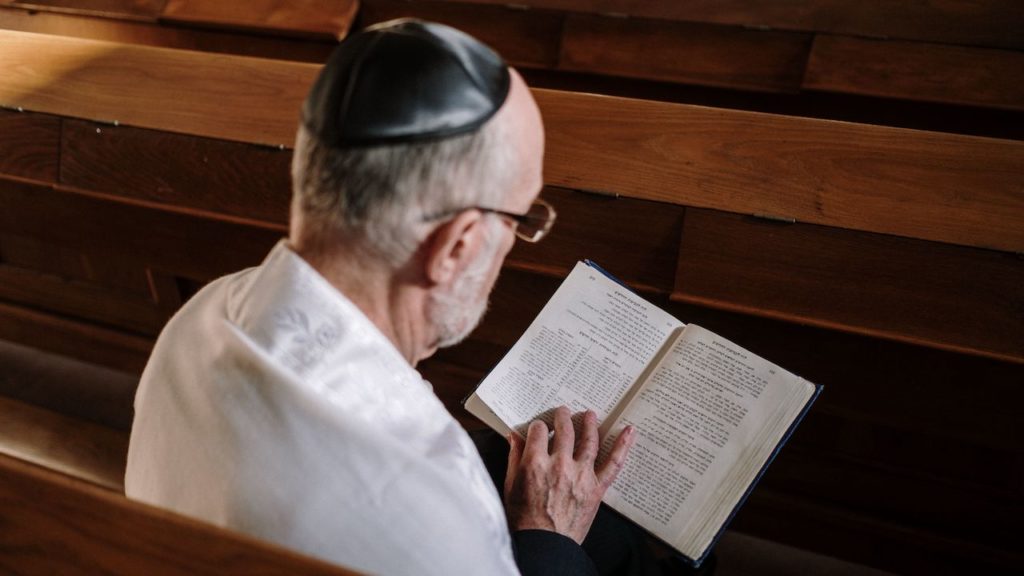
Picture: Pexels